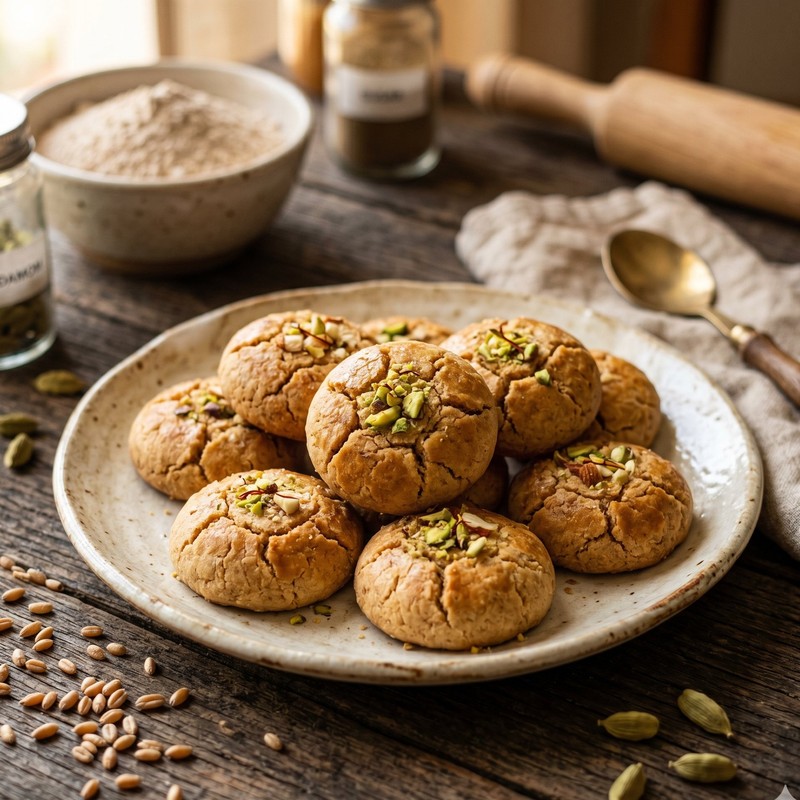
Few sweets capture the soul of an Indian home quite like Nan Khatai — that pale-golden, crackle-topped shortbread that crumbles the moment it touches your tongue and fills the kitchen with the warm perfume of cardamom and desi ghee. Equal parts nostalgia and indulgence, Nan Khatai has travelled from royal Mughal kitchens to neighbourhood bakeries to, today, the wellness-conscious modern pantry.
A Sweet With a Surprising History
The name "Nan Khatai" itself tells a story of cultural confluence — "nan" from the Persian word for bread, and "khatai" derived from the Afghani-Dari word for biscuit. Most food historians trace its origins to the 16th century, to a Dutch-and-Parsi run bakery in Surat, Gujarat. When European traders left, the bakery's Indian bakers reinvented the leftover dried bread into a sweet, ghee-rich biscuit — and Nan Khatai was born.
Over the centuries it spread across the subcontinent, each region adding its own signature: a hint of nutmeg here, a topping of pistachio there, a base of semolina, gram flour or refined flour depending on what the local kitchen favoured. What never changed was its defining quality — that impossibly tender, melt-in-mouth crumb that comes from the generous use of pure ghee.
The Science of the Melt
What makes a great Nan Khatai melt rather than snap? The answer lies in fat and flour chemistry. Ghee, being almost entirely fat with no water, coats the flour proteins and prevents gluten from forming long, chewy strands. The result is a short, crumbly texture — which is precisely why these biscuits are part of the global "shortbread" family. Baking (never frying) at a gentle temperature sets the structure while keeping the centre soft and sandy.
At ANORAA, we honour this science with small-batch baking and a strict clean-label promise: pure desi ghee, no palm oil, no artificial colours, and no preservatives — ever.
Four Ways to Love Nan Khatai
Because no two snackers are alike, we craft our Nan Khatai in four distinct variants — each with its own character, but all sharing that signature melt.
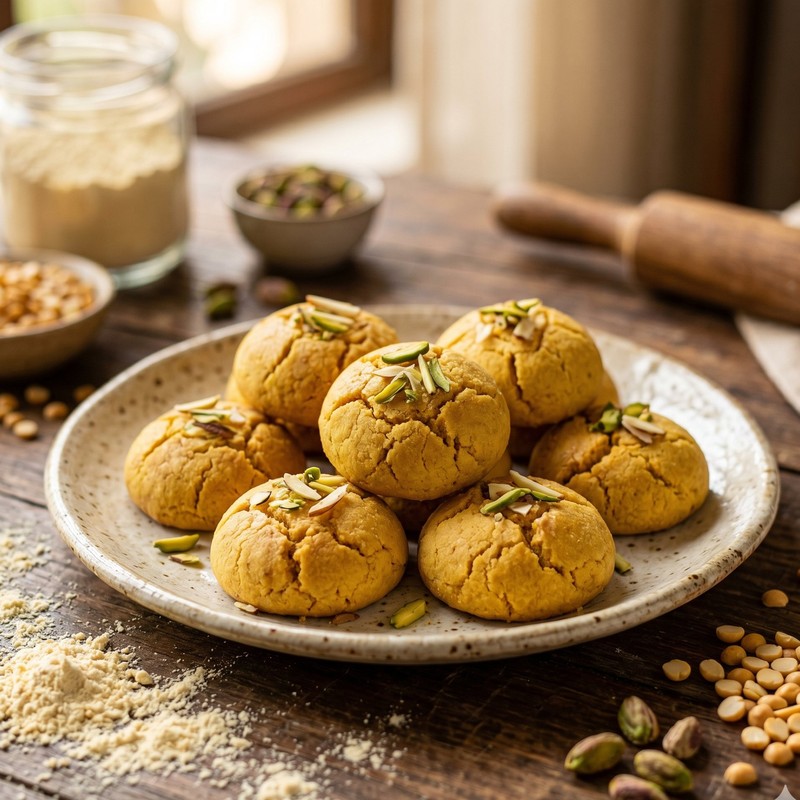
1. Wheat Flour (Aata): The wholesome classic. Made with whole wheat flour and pure desi ghee, it delivers the timeless, comforting melt with a cleaner, more nourishing profile than refined-flour versions. The everyday favourite for tea-time.
2. Besan (Gram Flour): A protein-rich, nuttier cousin. Roasted gram flour gives this variant a deep, earthy aroma and a richer, sandier crumb — beloved by those who grew up on besan ladoo and besan barfi.
3. Gluten-Free: All the heritage taste, none of the gluten. Made with a dedicated gluten-free flour blend (including almond flour), it is crafted to be safe for Celiac and gluten-sensitive snackers — without compromising on the tender, buttery experience.
4. Sugar-Free (Stevia): Guilt-free indulgence. Sweetened entirely with natural stevia (zero glycemic index), this diabetic-friendly variant lets the wellness-conscious enjoy every melt-in-mouth bite without the sugar worry.
The Perfect Tea-Time Companion
Nan Khatai and a cup of hot masala chai is one of those pairings that needs no improvement. The biscuit's gentle sweetness and crumbly texture are the perfect foil to a strong, spiced brew. It is equally at home in a festive gifting box, a child's tiffin, or as a quiet 4 PM pick-me-up.
Store them in an airtight container away from moisture, and they will hold their signature crunch for up to 30 days. Though, in most homes, a box of Nan Khatai rarely survives the week.
Heritage, Reimagined
For ANORAA, Nan Khatai is more than a biscuit — it is a bridge between the kitchens of our grandmothers and the wellness needs of today. By baking instead of frying, choosing desi ghee over palm oil, and offering wholesome variants for every dietary need, we keep this 500-year-old tradition alive and relevant. One melt-in-mouth bite at a time.